


A Better Choice
Saving the World's Favourite Fruit - One Data Point at a Time
How A Banana Company is using Ladybird IoT sensors to fight Panama Disease and reimagine banana farming in the Philippines.
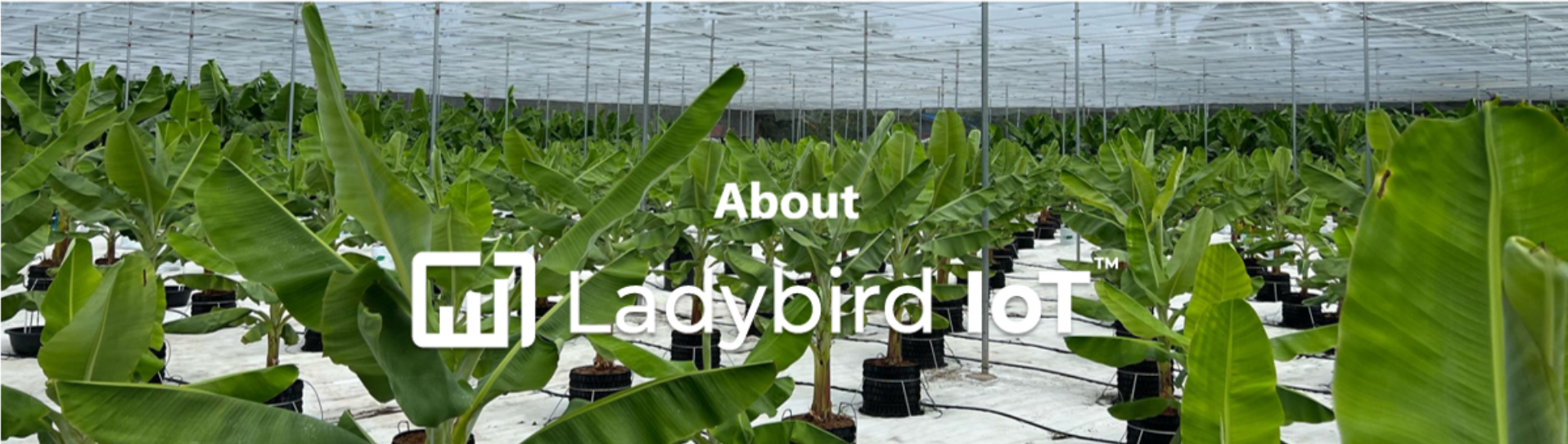
Every banana you have ever eaten is a clone. The Cavendish variety, the long yellow staple found in every supermarket on earth, reproduces without seeds, which makes it extraordinarily uniform and extraordinarily vulnerable. A single soil-borne fungus, Fusarium oxysporum, the agent behind Panama Disease (TR4), does not just kill one plant. It poisons the ground itself, sometimes for decades, silently waiting for the next crop to arrive.
For A Banana Company (ABC), the Philippines' third-largest banana exporter and a business that built its reputation on premium Cavendish quality, this is not an abstract threat, it is an existential one. The disease has already cost them their position as the country's second-largest exporter. The question keeping their team awake at night is not simply how to recover, but how to grow bananas in a world where the soil can no longer be trusted.
The answer, it turns out, begins with a small square sensor called Ladybird.

The Challenge: A Disease That Outlives the Harvest
Panama Disease TR4 is a masterpiece of biological persistence. Once established in farmland, the fungus can survive without a host for over 30 years. Traditional remedies such as crop rotation, chemical treatment, have proven ineffective. The only proven solution is to remove soil from the equation entirely.
ABC turned to substrate-based, soil-free cultivation, a technique pioneered in the Netherlands in collaboration with Wageningen University and Research (WUR). Growing bananas in cocoa bean husks and other inert substrates eliminates the fungal reservoir at source. But it introduces an entirely new layer of complexity: without soil as a natural buffer, every variable in the growing environment must be monitored and managed with precision.
Moisture is the most unforgiving. Too much, and banana roots rot within days. Too little, and growth stalls completely. The margin for error in a substrate system is far narrower than in conventional farming, and the Philippine heat and humidity make the challenge considerably harder.
The Solution: Ladybird IoT in the Field
ABC deployed Ladybird IoT's multi-parameter sensors across their trial plots, integrating real-time moisture, temperature, and humidity data into a centralised dashboard accessible by their on-the-ground team. The sensors were chosen for a specific reason: they replace what would otherwise require multiple separate instruments, reducing both installation complexity and potential failure points in a challenging tropical environment.
Renee Cayoca, ABC's Research and Operations Manager and the project lead, was logging data multiple times daily from the outset. The Ladybird dashboard became the operational nerve centre of the trial, the first thing checked each morning and the last reviewed each evening.
Deploying precision sensors in open tropical fields also demanded practical ingenuity. Working with technical guidance from the Ladybird IoT support team, Renee’s team developed a bespoke protective housing for the SM150-T probes, shielding the sensors and their connections from rain ingress and physical damage in the field. In a telling sign of how deeply the team had internalised the technology, Renee even fashioned a trial protective case from a non-functional probe to test fit and field accessibility before committing to a final installation approach. It is the kind of hands-on problem-solving that only emerges when a team is genuinely engaged with the tools they are using.
“Having access to real-time data through the dashboard enabled us to better understand soil moisture dynamics and plant behaviour, allowing us to optimise irrigation strategies and improve water-use efficiency.”
Renee Cayoca, Research and Operations Manager, A Banana Company
The Results: From Fixed Schedules to Plant-Led Irrigation
The shift from calendar-based irrigation to data-driven, demand-led watering was the most immediate and impactful change. Rather than irrigating on a fixed schedule, the team began responding to what the sensors were actually telling them: when plants needed water, how much, and when to hold back.
The results were tangible improvements in water-use efficiency, reduced plant stress, and a fundamentally stronger understanding of how substrate-grown banana plants behave under tropical conditions. This is R&D data that simply did not exist before, and it is now informing ABC's broader AI-driven farm management platform, currently in development.
Just as importantly, the Ladybird sensors were tested in conditions they were not originally designed for. Open-field tropical deployment, full sun, high humidity, heavy rain, is categorically different from the controlled greenhouse environments where such sensors are typically used. ABC's field feedback has contributed directly to further hardening of the product for exactly this kind of real-world deployment.
Looking Ahead: An Industry in Transition
ABC is not the only banana company watching this trial. Dole and Del Monte, two of the world's largest banana producers, have both expressed interest in the sensor technology. The Philippines banana industry, facing the same existential threat from Panama Disease, is looking for solutions that actually work at scale. ABC's substrate cultivation trial, underpinned by real-time IoT data, is one of the most credible answers currently being field-tested.
Visitors to ABC's operation regularly ask about the sensors on site. The Ladybird is increasingly visible not as a piece of agricultural hardware, but as a symbol of what modernised, data-driven tropical farming can look like.
“The Ladybird sensor has been instrumental in supporting our goal to modernise and elevate data-driven banana production in the Philippines.”
Renee Cayoca, A Banana Company
About Ladybird IoT
Ladybird IoT develops advanced, integrated sensor systems for precision agriculture. Designed to replace multiple single-parameter instruments with a single compact unit, Ladybird sensors provide real-time environmental data through an intuitive cloud dashboard, helping growers make faster, better-informed decisions in the field.
Founders Roland Heringa and Jasper van Roon share how they've built a cultivation system in the Philippines designed to tackle those other challenges head-on.
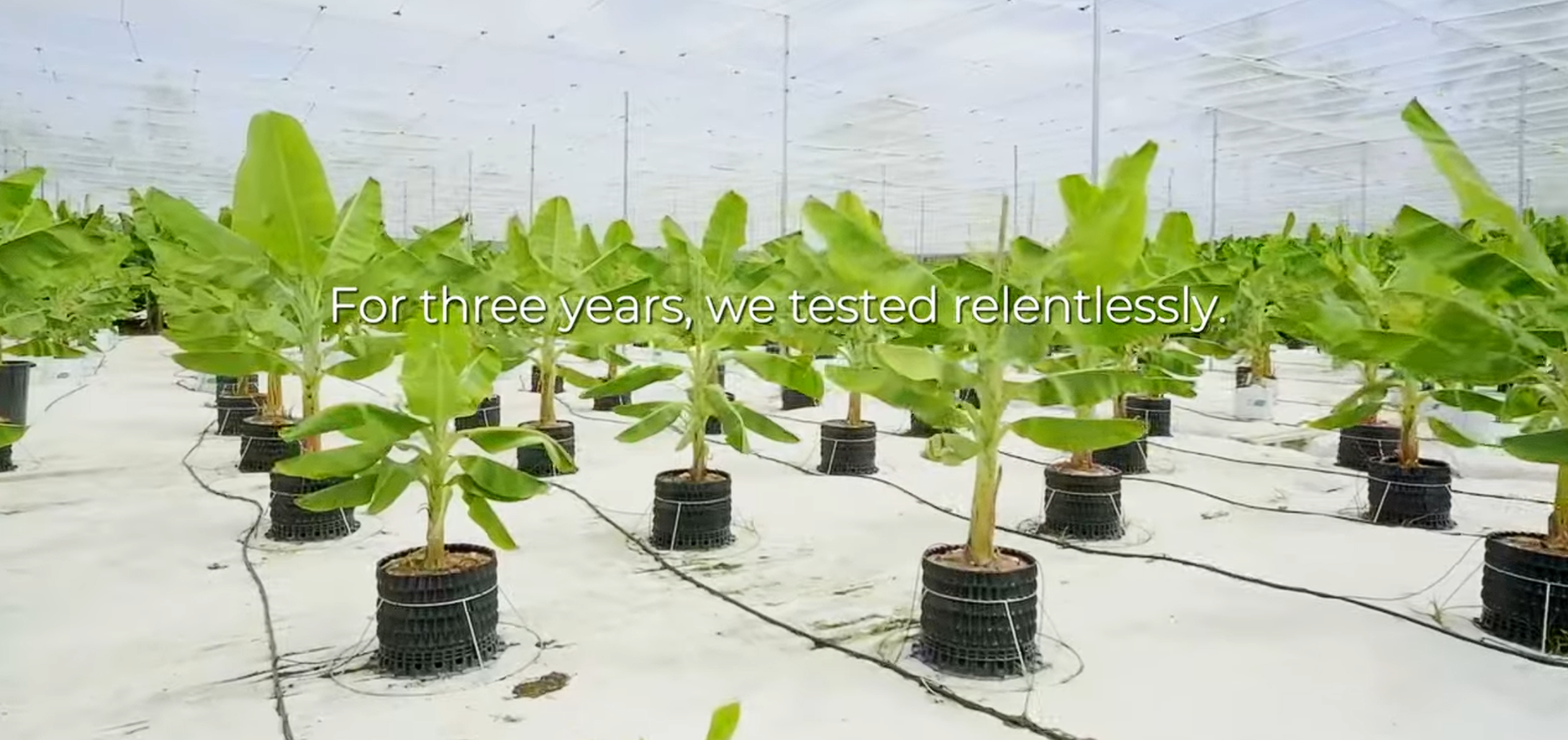
Early results in the Philippines are promising: average production has increased from 25 kg per plant to 40–52 kg, with less plant loss and lower use of both water and crop-protection products. Low MRL levels also increase product value. "What we're harvesting so far easily meets export standards," Jasper concludes.
Similar Articles from ABC
A new cultivation system doubles Cavendish banana yields in the Philippines
Banana growers around the world aren't just battling the stubborn soil-borne fungus Tropical Race 4 and diseases like Moko and Black Sigatoka. Water scarcity, rising costs, declining average yields, and growing market pressure to farm more sustainably are also keeping them awake at night.
A previous article explained how A Better Choice (ABC), a Dutch agritech company, keeps TR4 and Ralstonia, the bacterium behind Moko, out of plantations by disinfecting irrigation water with UV-C.
In this follow-up, founders Roland Heringa and Jasper van Roon share how they've built a cultivation system in the Philippines designed to tackle those other challenges head-on and Ladybird IoT are proud to be a part of Data Collection Process.
Water technology is only one piece of the puzzle. A Better Choice also developed the Premium Cultivation System (PCS): an integrated approach to banana production designed to give growers a viable path forward in a market where disease pressure, climate change, high costs, and water scarcity are converging.
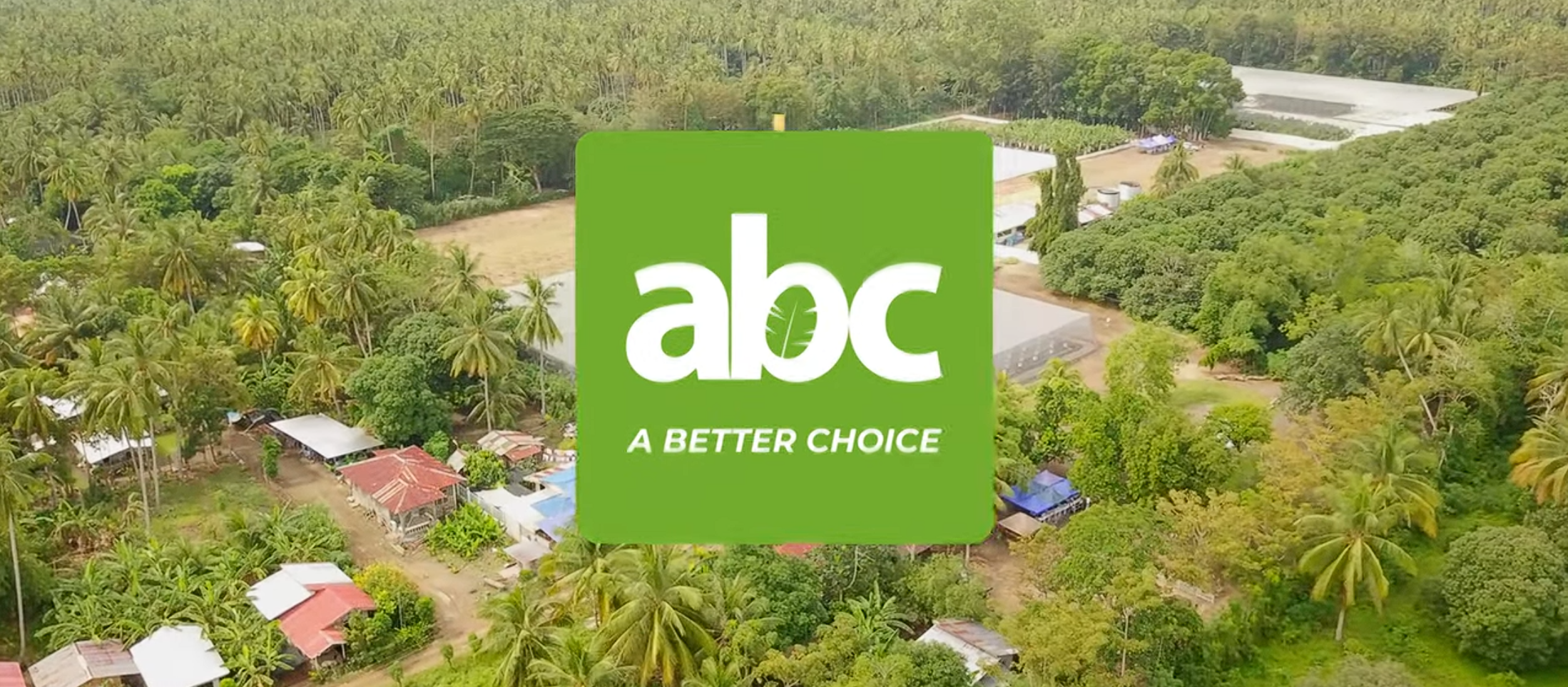
Water technology is only one piece of the puzzle. A Better Choice also developed the Premium Cultivation System (PCS): an integrated approach to banana production designed to give growers a viable path forward in a market where disease pressure, climate change, high costs, and water scarcity are converging.
See the full article here:
A new cultivation system doubles Cavendish banana yields in the Philippines